> For the complete documentation index, see [llms.txt](https://letodev.gitbook.io/getting-started/llms.txt). Markdown versions of documentation pages are available by appending `.md` to page URLs; this page is available as [Markdown](https://letodev.gitbook.io/getting-started/website-analytics.md).
# Website Analytics
Use Leto Analytics on a simple IPFS website hosted on Web3.storage
## Overview
Use [Leto](https://leto.gg/) with an IPFS hosted website to monitor traffic, watch for system abuse, and improve your system.
In this example, an HTML webpage is uploaded to IPFS via [Web3.storage](https://web3.storage/) and is retrieved using the [Leto IPFS gateway](https://letodev.gitbook.io/getting-started/documentation/ipfs-gateway-api). Anonymous analytics data is then accessible through the [Leto dashboard](https://leto.gg/) or [Analytics API](https://letodev.gitbook.io/getting-started/documentation/analytics-rest-api).
## Link in Bio webpage on IPFS
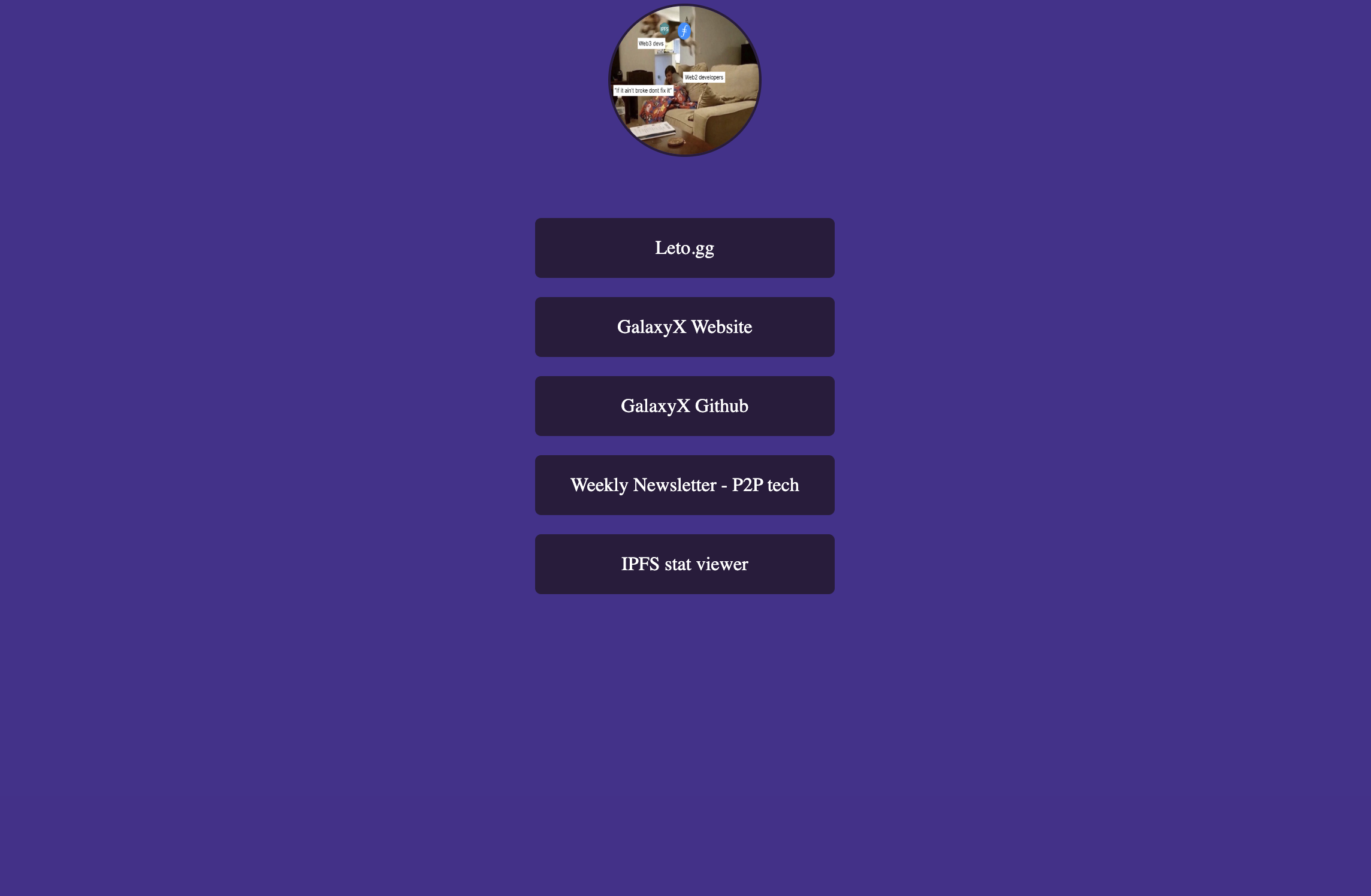
We made a Link in Bio webpage for this example. Feel free to make any type of webpage that suits your needs!
Create a simple html webpage to display your important links. View the code used in this example [here](https://github.com/Leto-gg/examples/tree/main/linkInBio). For this example, there is some basic css in the index.html file to make it easy to upload to IPFS via [Web3.storage](https://web3.storage/).
{% hint style="info" %}
If you want to include other files (like a separate css file) or have an app like a react app, you will have to build it and then upload the build folder to [Web3.storage](https://web3.storage/). You can use providers like [Spheron](https://spheron.network/) and [Dappling](https://dappling.network/) to build the file and launch the app on IPFS for you.
{% endhint %}
### Web3.storage
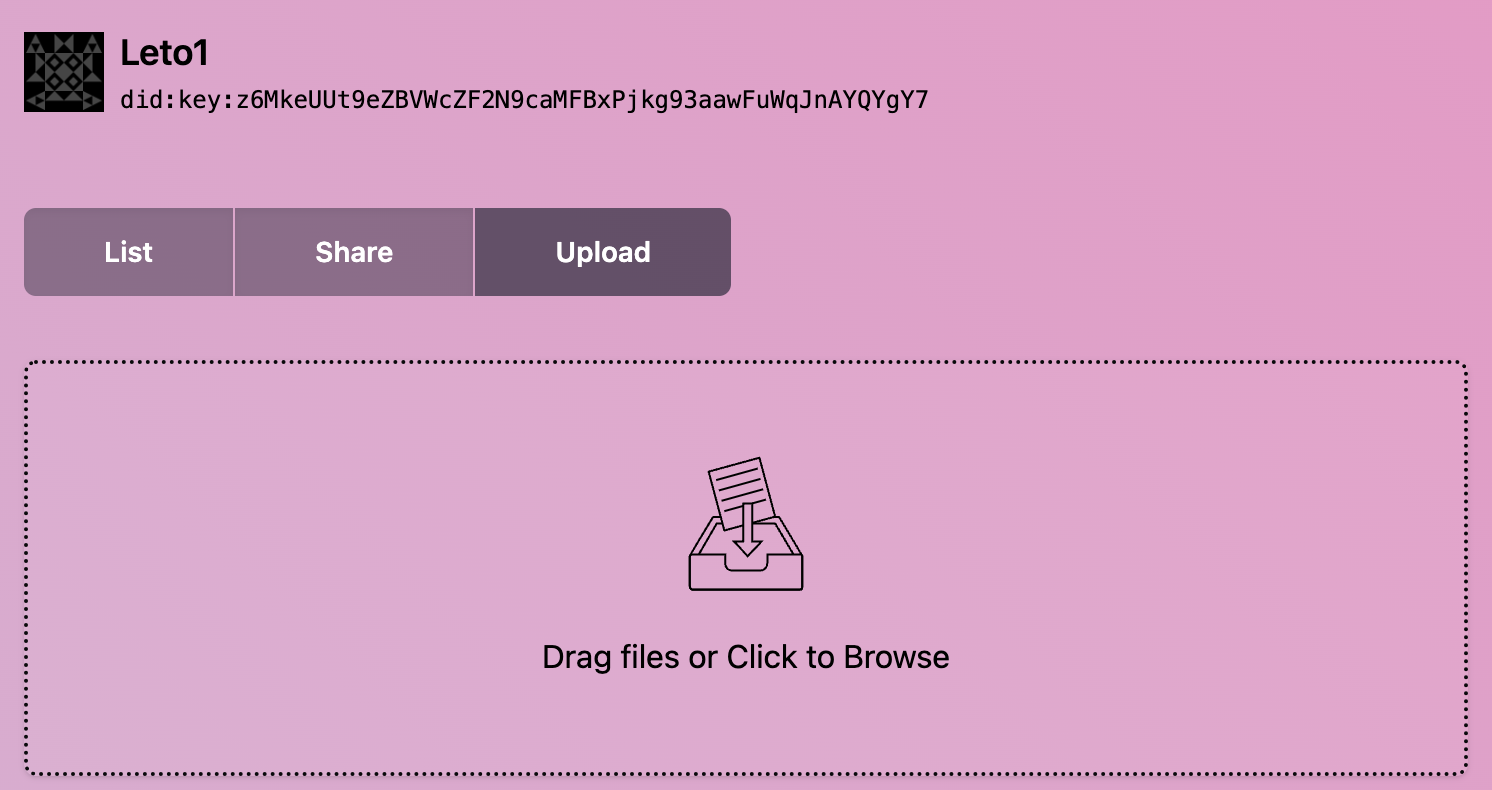
Login to [web3.storage](https://web3.storage/), make a space, and upload your index.html file.
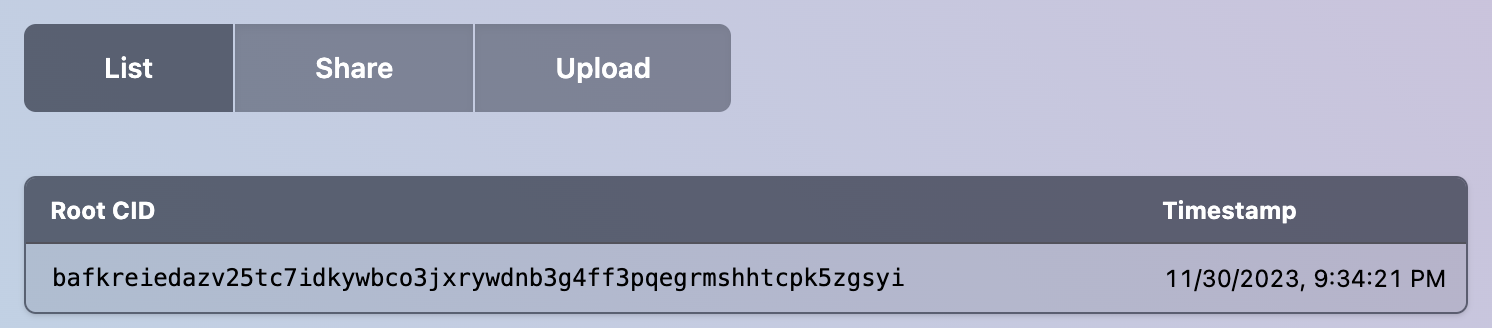
Now, the index.html file (in this case a webpage) is accessible by clicking the link under “CID”.
To collect anonymous analytics for this webpage, input your CID into the following link format `https://leto.gg/ipfs/{yourCID}` instead of using the link provided by web3.storage:
When users retrieve the webpage through this link, anonymous analytics data is generated. It’s that easy to host a webpage on IPFS and measure webpage performance with Leto!
## Interacting with your analytics
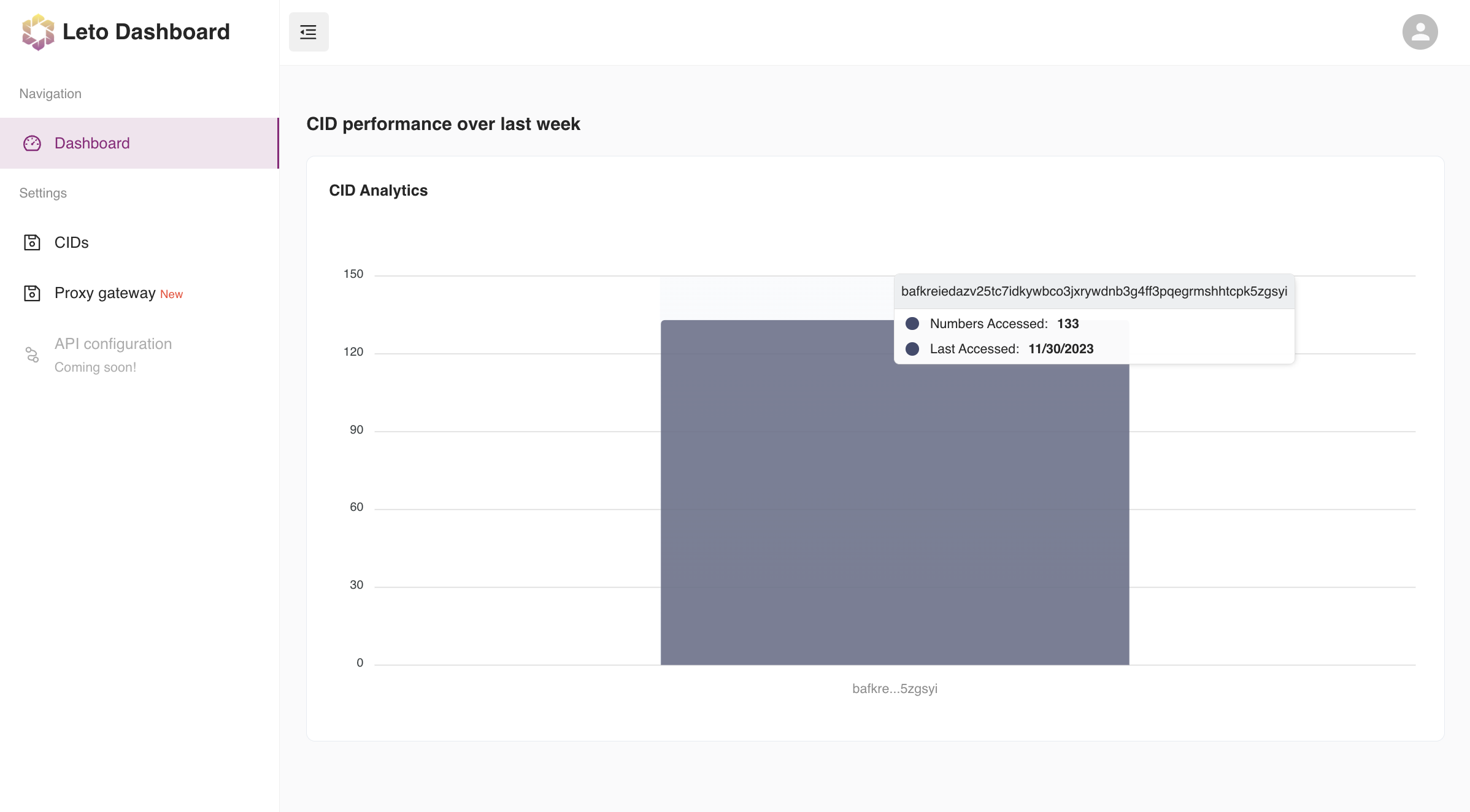
Use the Leto dashboard to view the analytics data generated by your webpage. Login at [Leto.gg](https://leto.gg/) and select “CIDs''. Input the CID for your website.